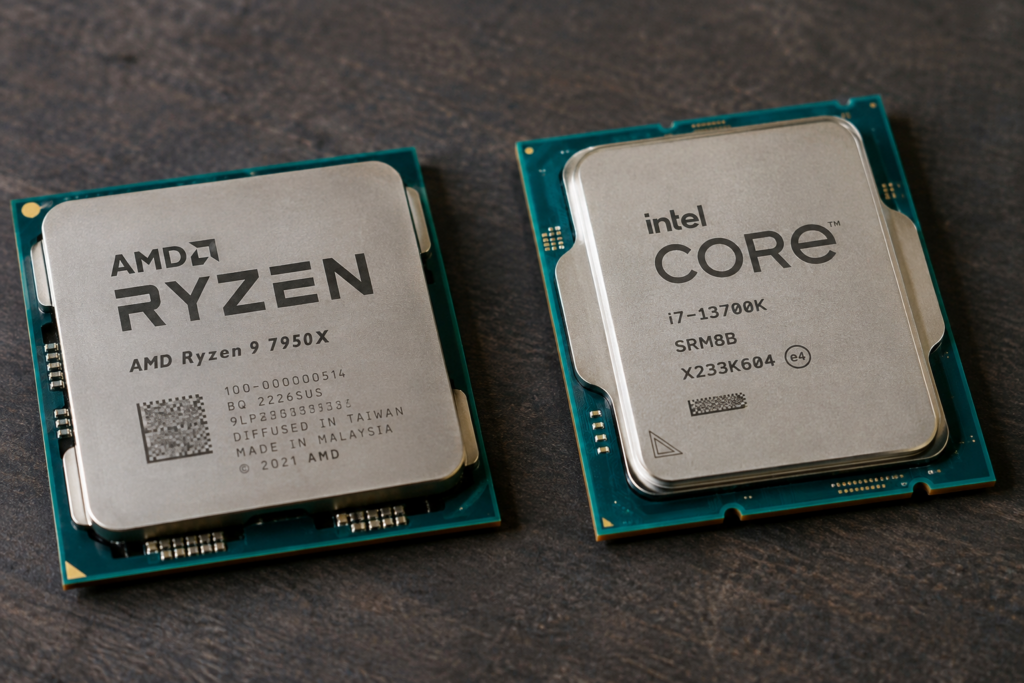
Intel and AMD stocks fell sharply on Monday as rising oil prices and Treasury yields put pressure on broader markets, with chip and AI-related shares bearing the brunt of the selloff.
Intel INTC shares were down over 6%, while AMD fell over 5%.
Brent crude traded more than 3% higher at $108 a barrel, while West Texas Intermediate futures gained 3.5% to $95.64 after President Donald Trump rejected conditions for a ceasefire presented by Iran.
At the same time, Treasury yields extended last week’s sharp moves higher.
The benchmark 10-year Treasury yield traded above 5.2%, while the 30-year yield topped 5.5%, with both hovering around multiyear highs.
Higher oil prices can add to inflation concerns and reinforce expectations for elevated interest rates, while rising bond yields tend to pressure high-growth technology stocks by increasing the discount rate applied to future earnings.
The broader Philadelphia Semiconductor Index fell 3%.
The two stocks may have also suffered from profit-taking after an intense short-term rally owing to optimism around Meta’s Muse AI.
Intel climbed from around $89 in early September to above $123 by September 25, including a 9.1% one-day jump in the previous session.
The sharp advance left the shares stretched in the short term and vulnerable to profit-taking.
Meta’s Muse fuels CPU optimism
Despite Monday’s decline, Intel and AMD have benefited from growing optimism that Meta’s Muse AI technology could create additional demand for general-purpose CPUs.
The stocks have gained about 30% in the last month.
The argument is that increasingly capable AI agents performing more tasks independently could require greater computing resources, potentially expanding the market for server CPUs made by Intel and AMD, as well as Arm-based processors.
Meta has previously said that as its agentic AI efforts advance, “compute requirements are evolving to demand more CPU.”
“The market has interpreted Muse as a boon for the already significantly bottlenecked CPU market,” said Michael O’Rourke, chief market strategist at JonesTrading.
The optimism helped AMD cross the $1 trillion market-capitalisation threshold for the first time last week.
AMD target raised as CPU market outlook improves
The recent rally has also attracted increasingly bullish analyst forecasts.
BofA Securities raised its price target on Advanced Micro Devices stock to $720 from $620 while maintaining a Buy rating.
BofA expects the server CPU total addressable market to expand from $61 billion in 2026 to $211 billion by 2030.
The firm estimates that $180 billion of the 2030 market will be related to AI.
The analyst also pointed to the Anthropic-Akamai CPU infrastructure deal as further evidence of the growing importance of CPUs as AI systems become more agentic.
Meta expands Muse ecosystem
The rally in AI-linked chip stocks received another boost after Meta’s Connect event, where the company unveiled hardware designed to expand access to Muse.
Meta introduced Meta Charm, a small handheld device intended to give users direct access to Muse rather than relying on AI applications running on smartphones.
“It is actually quite clear personal superintelligence will not only come first; it will be much bigger and more important,” Zuckerberg said at the company’s conference.
“So we have shifted our focus to building the best devices for personal superintelligence,” he said, adding that Muse would also soon be available across Meta’s smart glasses lineup.
Meta is also expanding Muse through partnerships with Walmart, Best Buy, Sephora, Wayfair, Dick’s Sporting Goods and Gap.
JPMorgan, Citizens, KeyBanc and other analysts have raised their Meta price targets on expectations that Muse could support the company’s growth, adding to the broader enthusiasm around the AI infrastructure trade.
The post Why are Intel and AMD stocks falling on Monday? appeared first on Invezz