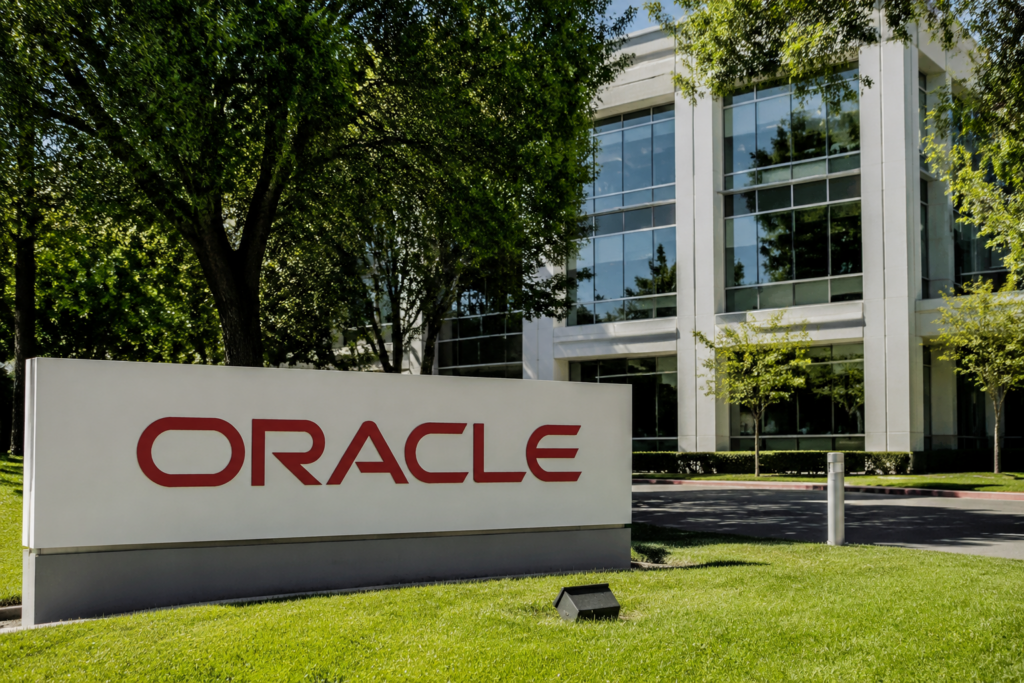
Oracle stock (ORCL) traded slightly higher on Wednesday despite reports that the company had cancelled a $7 billion chip leasing agreement with China’s Tencent following pressure from the Trump administration, the Financial Times reported.
The cancellation highlights the growing challenges for US cloud providers serving Chinese artificial intelligence companies, as Washington increases scrutiny of arrangements that could give Chinese groups access to advanced computing infrastructure.
The development comes as Oracle steps up fundraising to support its AI and cloud expansion.
The company recently announced plans to raise $20 billion through equity and debt offerings to finance its infrastructure investments.
Oracle stock was up 0.95% at the time of writing.
US pressure leads to cancellation of Tencent deal
The five-year contract would have given Tencent access to as many as 100,000 advanced AI chips across data centres in Southeast Asia.
Estimated to be worth $7 billion, the agreement was first reported by the Financial Times in September and would have been Tencent’s largest overseas chip leasing arrangement.
According to the Financial Times report, US officials approached Oracle to raise concerns about the agreement.
Tencent also received visits from senior officials in Guangdong, where the company is based, who encouraged it to support domestic Chinese chip suppliers.
The contract would have allowed Tencent to access advanced processors restricted in China under US export controls and Beijing’s policies.
Chinese technology companies have increasingly turned to overseas data centres to secure computing capacity for training AI models.
The cancellation comes as US authorities increase scrutiny of arrangements that allow Chinese companies to access advanced computing infrastructure outside China.
The Financial Times also reported that Nvidia had told cloud computing clients they must sell at least 51% of their services to non-Chinese companies.
ByteDance and Alibaba remain among the biggest customers of data centres in Southeast Asia, while Tencent has been increasing its infrastructure spending as it develops its AI capabilities.
Oracle is a major supplier to ByteDance in Asia, operating multiple data centres in Malaysia.
It previously hosted US customer data for TikTok before joining a consortium that acquired the social media platform’s US operations late last year.
Oracle faces questions over AI customer exposure
The Tencent agreement was also expected to help Oracle diversify its customer base beyond a relatively small number of large clients.
Its reliance on cloud contracts with OpenAI has been cited by investors as a potential risk.
The cancellation adds uncertainty to Oracle’s efforts to expand its AI infrastructure business, particularly as Chinese companies seek access to computing resources unavailable in their domestic market.
Demand for overseas chip leasing has increased amid tighter export controls restricting the shipment of advanced Nvidia processors to China, including through intermediary locations.
These constraints have contributed to higher prices, longer contract terms and larger upfront payments for data centre leases.
Tencent’s latest Hunyuan models have shown performance improvements, narrowing the gap with leading domestic models such as Alibaba’s Qwen.
Oracle’s $20B fundraising highlights AI spending needs
Investors are also monitoring how Oracle finances its AI infrastructure expansion.
On Monday, the company said it would raise $20 billion through equity and debt offerings to fund its cloud and AI investments.
Oracle priced the sale of 86.2 million shares at $116 each, an 11.2% discount to Friday’s closing price.
The equity offering is expected to raise about $10 billion, with another $10 billion coming from debt offerings maturing between 2029 and 2046.
The fundraising underscores the scale of Oracle’s investment plans as it seeks to more than triple revenue by fiscal 2030.
The company said capital spending would peak in the current fiscal year and the following year, while pledging to raise no more than $20 billion in additional AI financing through fiscal 2030.
Oracle reported first-quarter revenue of $19.35 billion, up 30% and above Wall Street expectations of $19.14 billion.
It secured more than $30 billion in additional AI cloud contracts during the quarter, lifting its remaining performance obligations, or backlog, to $664 billion.
The company also raised its fiscal 2027 adjusted earnings and revenue forecasts while maintaining its projection for $70 billion in full-year capital spending.
The post Oracle stock in green despite reported $7B Tencent chip deal cancellation appeared first on Invezz