2026 saw cryptocurrency entering a bear market while the AI trade continued to grow rapidly, despite fears around AI spending causing much volatility.
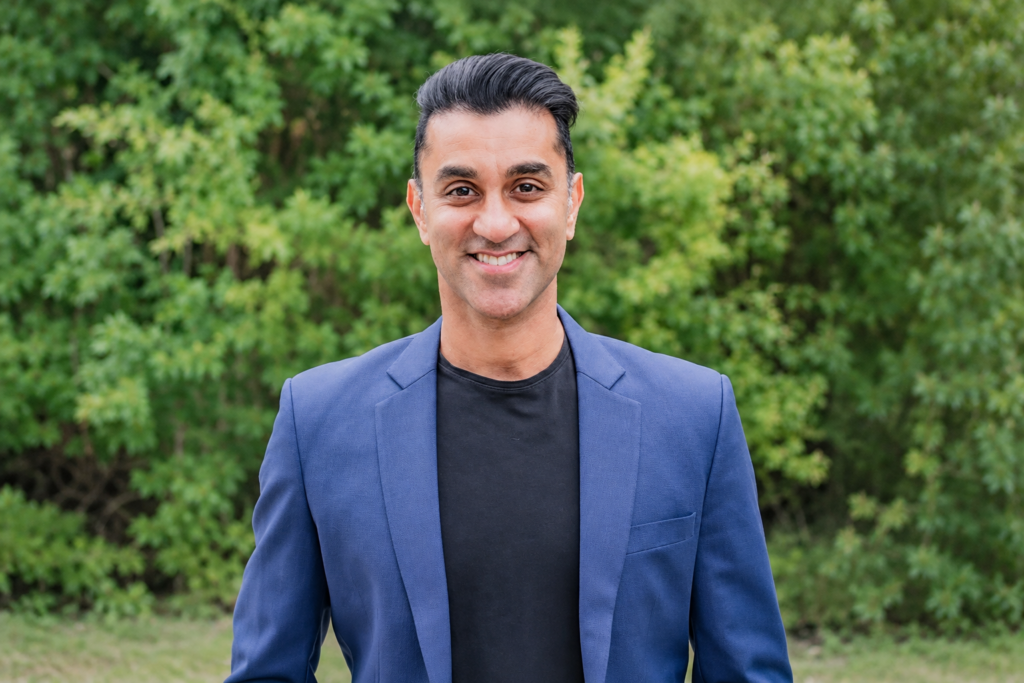
Utkarsh Ahuja, managing partner and founder at Moon Pursuit Capital, a Miami-based investment firm focused on digital assets, AI, and emerging technologies, says that while the worst for crypto is over, he would not expect an explosive rally but a gradual recovery, as he sees Bitcoin closing the year between $ 85,000 and $100,000.
The firm has recently launched a $100 million market-neutral quantitative crypto fund and co-led an $8 million seed round for AmericanFortress, which is developing quantum-resistant blockchain security infrastructure.
In an interview with Invezz, Ahuja also holds forth on his forecast for Bitcoin and altcoins for 2027, the rotation of capital from crypto into AI, why he expects some overinvestment in AI to become apparent in 2027, and how AI is changing the way institutions deploy capital.
Excerpts:
Worst over for crypto; expect gradual recovery
Invezz: It has been a rough year for crypto. Do you think the worst is over? What’s your forecast for where Bitcoin could end up by the end of 2026?
I believe we’ve moved past the bottom of this corrective cycle and entered the early stages of a new bull market.
That doesn’t necessarily mean an explosive rally.
I expect a more gradual recovery, with periods of consolidation and occasional pullbacks, but the broader trajectory has shifted upward.
My base case is that Bitcoin finishes 2026 between $85,000 and $100,000, supported by improving liquidity conditions and stabilizing institutional flows.
Bitcoin’s deeper institutional investor base provides a stronger foundation for long-term demand, although volatility and historical market cycles will continue to influence price movements.
BTC could head into 2027 with a potential price range of $120,000- $150,000
Invezz: What is your outlook for Bitcoin in 2027, and which variables will matter most: interest rates, global liquidity, institutional flows or regulatory developments?
I’m constructive on Bitcoin heading into 2027, with a potential price range of $120,000 to $150,000 as the new bull market develops.
I expect the recovery to be gradual rather than a straight-line rally.
Global liquidity will be the most important driver, followed by institutional capital flows.
Regulation remains critical for long-term adoption, particularly around custody, stablecoins, and institutional participation, but favourable policies alone won’t sustain a rally without supportive monetary conditions.
I also expect Bitcoin’s growing acceptance as a strategic portfolio allocation among institutions and family offices to become an increasingly important source of demand.
Why Hyperliquid, Solana, Zcash could shine in 2027
Invezz: Which altcoins could be the big winners in 2027?
I believe 2027 will increasingly reward altcoins demonstrating real economic activity, sustainable revenue, and meaningful token value accrual rather than speculative narratives.
Hyperliquid is particularly compelling given its strong position in decentralized derivatives trading, substantial revenue generation, and token buyback mechanism.
Solana also remains interesting, although its reliance on memecoin-driven activity highlights the importance of transitioning toward more sustainable applications such as payments, DeFi, and tokenization.
I’m also bullish on privacy-focused blockchain technologies as institutional adoption increases the need for transaction confidentiality.
Zcash could benefit from this trend, although its significant recent appreciation warrants caution.
Ultimately, I favor decentralized financial infrastructure, tokenization and privacy technologies, with a particular focus on projects where growing adoption translates into tangible value for token holders.
Rotation away from crypto into AI is not permanent
Invezz: We witnessed a significant rotation of institutional and speculative money away from crypto this year into AI stocks. Do you expect this trend to continue next year? Which sectors of the AI buildout are firms like yours betting on most?
AI will likely continue attracting substantial institutional capital in 2027, driven by significant investment from hyperscalers, enterprises, and governments.
However, I don’t believe the rotation away from crypto is permanent, particularly as liquidity conditions improve and investors regain an appetite for risk.
Within AI, I see compelling opportunities in infrastructure, particularly semiconductors, power generation, grid infrastructure, networking and cooling technologies.
The biggest constraints on AI growth extend beyond computing power to electricity, connectivity and efficient deployment.
I favor businesses addressing these bottlenecks with sustainable demand, pricing power and disciplined capital expenditure.
On AI spending and the future of neoclouds
Invezz: AI infrastructure companies are committing enormous sums to chips and data centers, often relying on debt and external financing. We are all seeing the debate around neoclouds play out. Which side of the debate do you find yourself on? Do you see risks of overinvestment, and how might that affect the broader technology investment landscape in 2027? Do you think it will lead to more concentration in AI trade among some select mega-cap tech companies and hyperscalers?
I’m bullish on long-term AI computing demand, but investors need to distinguish between strong underlying demand and the financing structures supporting infrastructure expansion.
Neoclouds offer valuable flexibility, but financing rapidly depreciating GPUs with substantial debt creates risks, particularly when utilization and future pricing remain uncertain.
I expect some overinvestment to become apparent in 2027, potentially leading to consolidation as financially stronger operators acquire assets from overleveraged competitors.
This could further favor hyperscalers with cheaper access to capital, while creating opportunities for specialized operators with contracted revenue, disciplined deployment and sustainable cost advantages.
How AI is rewriting rules of institutional investment
Invezz: AI has changed the investment patterns of VCs. For example, some VCs are invested in both OpenAI and Anthropic, breaking away from the trend of not betting on rival startups. What is driving this, and can you list some other ways in which the AI boom is rewriting the rules of institutional investment?
Investors backing competing AI companies reflects both the enormous scale of the opportunity and uncertainty over which businesses will ultimately dominate.
Technological leadership can shift quickly, making concentrated exposure to a single foundation-model provider increasingly risky.
AI is also concentrating venture capital into a relatively small number of companies, with funding rounds approaching the scale traditionally associated with public markets.
We’re seeing greater overlap between venture capital, growth equity, infrastructure financing and strategic corporate investment.
Going forward, investors will place greater emphasis on computing economics, proprietary data, customer retention and sustainable profitability rather than growth alone.
Anthropic IPO an important milestone for AI, but valuation debate to remain alive
Invezz: What’s your take on Anthropic’s IPO?
Anthropic’s potential IPO represents an important milestone for AI, offering public-market investors an opportunity to evaluate a leading foundation-model company through the lens of financial performance and capital efficiency.
Its reported enterprise adoption demonstrates substantial commercial demand, but the key questions concern gross margins, inference costs, capital requirements, and the ability to convert rapid revenue growth into sustainable free cash flow.
The valuation debate will be particularly interesting: should Anthropic command software-style multiples, infrastructure-style valuations, or something in between?
I’m bullish on long-term institutional demand for AI, but even exceptional companies can become poor investments at excessive valuations.
On Moon Pursuit Capital’s $100M quantitative crypto fund
Invezz: Moon Pursuit recently launched a $100 million market-neutral quantitative crypto fund. What market opportunity or investor demand prompted the launch?
We’re preparing to launch a $100 million market-neutral quantitative crypto fund in response to growing institutional demand for liquidity, capital flexibility, and consistent, risk-adjusted returns without relying on directional cryptocurrency exposure.
Liquidity has become particularly important as substantial institutional capital remains tied up in longer-duration private investments.
Investors increasingly want strategies that offer greater flexibility while maintaining the potential for attractive returns.
Crypto markets remain fragmented and structurally inefficient, creating opportunities for quantitative strategies to capture alpha through systematic trading and relative-value opportunities across market conditions.
At Moon Pursuit Capital, we’re focused on building an institutional-grade platform that allocates across complementary quantitative strategies, emphasizing diversification, liquidity, drawdown management, and disciplined risk controls.
We believe market-neutral strategies will become an increasingly important component of institutional digital asset portfolios.’
AI not a bubble, but bubbles are forming within the sector
Invezz: Lastly, the question of whether AI is a bubble doesn’t seem to go away. What’s your take, and which segments of the trade will you caution against?
I don’t believe AI is a bubble, but I do believe there are bubbles forming within AI.
Genuine enterprise adoption and productivity gains support the sector’s long-term potential, but valuations in certain segments have moved ahead of underlying fundamentals.
I’d be particularly cautious around highly leveraged infrastructure operators without sufficient contracted demand, AI application companies lacking differentiation, and businesses whose valuations depend on aggressive assumptions about future profitability.
I expect 2027 to bring greater scrutiny of capital efficiency, sustainable margins, and returns on invested capital, ultimately separating businesses with durable competitive advantages from those driven primarily by speculative enthusiasm.
The post BTC in new bull market, could see $150K in 2027: Utkarsh Ahuja, Moon Pursuit Capital appeared first on Invezz