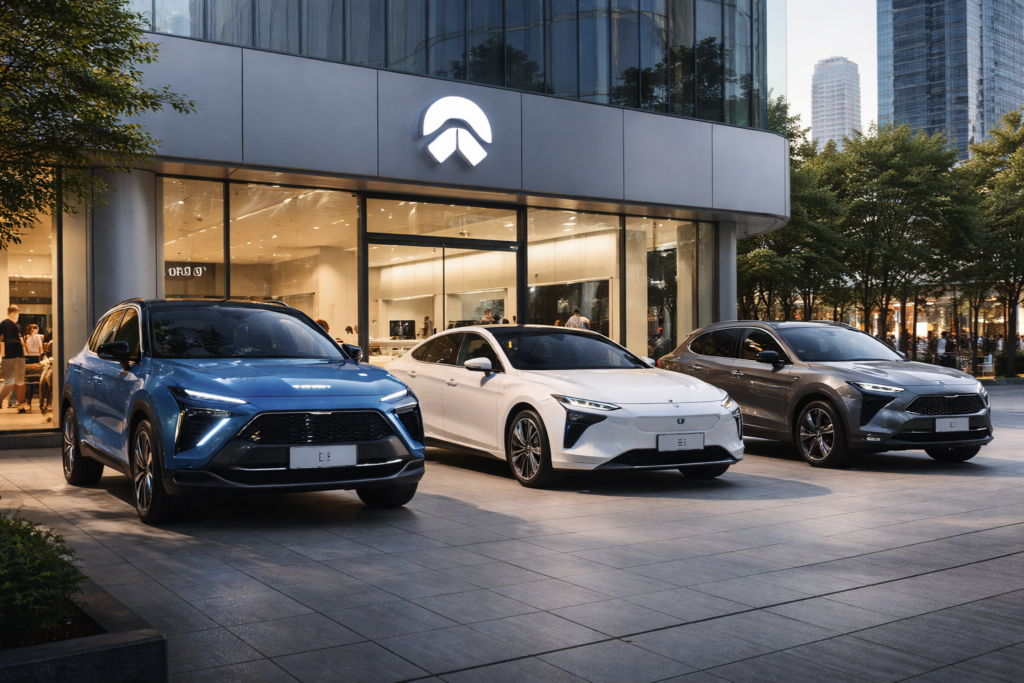
Chinese EV stocks are in a strong freefall this year as demand among customers wanes and as the government stops prioritizing the industry. Nio stock has slumped to $3.29, down by over 53% from its highest point this year and by 95% from its all-time high.
Polestar, a company that emerged from Geely, tumbled to $3.65, down by 99% from its all-time high. XPeng stock dropped to $9.30, down by over 67% from its peak. Other EV companies like Li Auto, Xiaomi, and BYD have all tumbled this year.
Chinese EV demand is waning as oversupply concerns remain
Chinese electric vehicles are wowing the world, thanks to their long ranges and advanced technologies. They are also much cheaper than those made by American and European companies.
The challenge, however, is that the domestic market is facing substantial headwinds, with companies producing more vehicles than people are buying. There are now about 143 electric vehicles selling at least one product.
Estimates are that the number of passenger vehicles sold this year will drop to 18.5 million, a 22% dive from those sold last year, and this weakness will likely persist. If this is the real number, it will mark the worst performance since 2014.
Top EV companies are struggling, pushing them to offer substantial discounts. A good example of this is a company called Skyworth, which opened a plant capable of making 100,000 vehicles a year in 2021. Its sales this year through September stood at just 660, according to the WSJ.
Recent delivery numbers show that many of the companies delivered weak numbers. XPeng delivered 41,256 vehicles in September, down by 0.78% from the same period last year. Xiaomi, a company that once had long lines, delivered 40,015 vehicles, down by 4.61%, while Li Auto sold 31,817 vehicles.
Investors have increasingly shorted Chinese companies
The ongoing weakness has also been driven by actions by Beijing, which has stopped prioritizing the EV industry. As a result, the incentives it placed in the industry have started ending.
At the same time, there are concerns about the ongoing price wars in the Chinese EV industry as companies battle for market share.
These concerns are compounded by the fact that the cost of doing business is still elevated. While Chinese inflation remains low, the cost of shipping raw materials to the company has continued to rise because of the ongoing US-Iran war.
The companies are also facing challenges in their goal of disrupting the global auto industry. The United States has already placed 100% tariffs, while Europe is considering similar moves. In a recent statement, the head of Volkswagen said:
“These vehicles are sold at Chinese price points we cannot match with European cost structures.”
He was talking about BYD’s flagship hybrid sedan, which is now selling at $44,000 in the UK, $10,000 less than a similarly equipped Volkswagen Passat.
All these factors explain why investors have continued shorting Chinese EV companies. Top companies like Li Auto, Nio, and XPeng have all seen their short interest continue rising this year.
The post Here’s why Chinese EV stocks like Li Auto, XPeng, Polestar, and Nio are falling appeared first on Invezz