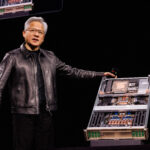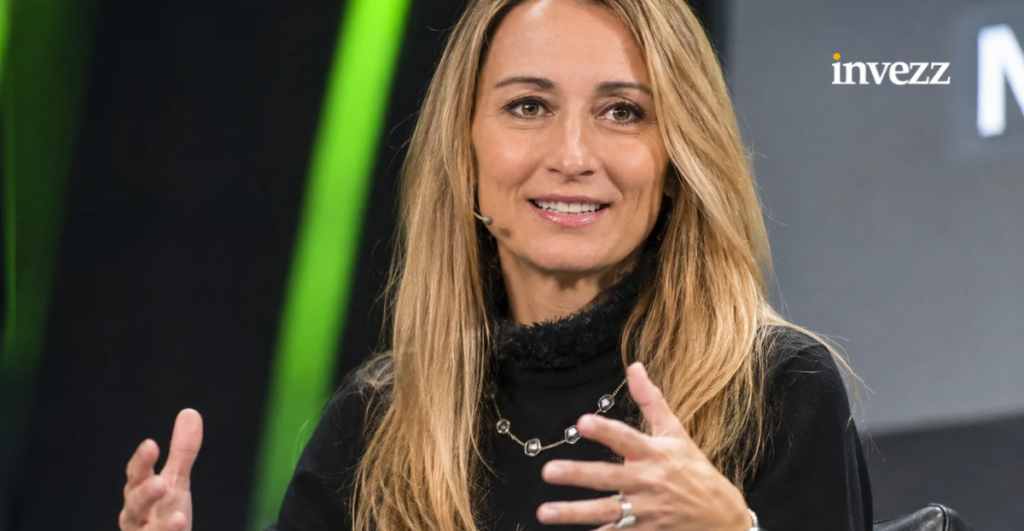
Nvidia (NVDA) investors woke up this morning to a scenario few expected, or at least didn’t hope for – the sudden departure of company co-founder and longtime chief executive Jensen Huang.
With the board appointing Colette Kress as interim CEO, the conversation has quickly shifted from the circumstances surrounding Huang’s exit to a more important question for shareholders: who exactly is Kress, and what comes next for the world’s most influential AI hardware company?
Nvidia stock now faces its first major leadership transition during the AI era, a test that could shape its trajectory for years.
So who really is Colette Kress?
Unlike Jensen Huang – whose trademark leather jackets made him one of Silicon Valley’s most recognizable figures – Colette Kress has largely operated behind the scenes.
Yet many investors already know her voice from earnings calls and investor presentations.
Nvidia confirmed that Kress, currently executive vice president and chief financial officer, will serve as interim CEO following Huang’s resignation.
That detail matters because modern Nvidia is not just a chip company.
It is a sprawling ecosystem spanning AI accelerators, networking, software platforms, cloud partnerships, automotive tech, robotics, and sovereign AI initiatives.
As CFO, Kress has been deeply involved in managing the company’s explosive growth, capital allocation, and communication with Wall Street.
Investors should therefore view her appointment less as an emergency outsider selection and more as the elevation of a senior executive already embedded in NVDA’s strategic decision-making.
The challenge is not whether Kress understands Nvidia.
The challenge is whether she can fill the void left by a founder who became synonymous with the global AI boom itself. That distinction could prove crucial in coming quarters.
Nvidia’s biggest risk is leadership transition
The market’s immediate reaction to Huang’s departure reflects more than headline risk.
Nvidia’s dominance in artificial intelligence has been closely intertwined with Huang’s reputation as both a visionary technologist and a master strategist.
Even before his resignation, analysts had highlighted the company’s dependence on its founder.
CNBC reported this week that Nvidia lacks a clearly established successor figure with the public profile and industry stature of Huang.
That creates what investors often call “key-man risk.”
NVDA still possesses the industry’s most important AI accelerator portfolio, a massive software moat through CUDA, strong relationships with hyperscale cloud providers, and enormous demand from AI developers.
None of those advantages suddenly disappear because of a leadership change.
However, the AI race is entering a phase where execution matters as much as innovation.
Rivals are investing aggressively, cloud providers are building custom silicon, and governments are increasingly scrutinizing AI infrastructure.
Kress must demonstrate that Nvidia’s strategic roadmap is institutional rather than personal.
If the company can convince markets that its culture and product pipeline extend beyond one individual, the leadership shock may ultimately prove temporary.
What comes next for Nvidia shares?
The next chapter for Nvidia will likely revolve around governance rather than technology.
The company announced that Kress will serve as interim CEO, but investors will be watching closely to see whether the board ultimately makes that appointment permanent or launches a broader search.
In the near term, Nvidia’s priorities are unlikely to change.
Demand for AI computing remains enormous, and the company’s data-center business continues to sit at the center of global AI spending trends.
Customers building large language models and AI infrastructure still need Nvidia hardware, software, and networking solutions.
The deeper question is whether Nvidia can evolve from a founder-led phenomenon into a mature institution capable of thriving through leadership changes.
Some of the world’s most durable technology companies proved their strength only after their iconic founders stepped aside.
Nvidia now faces a similar test.
For investors, the story is no longer simply about who left.
It is about whether Colette Kress can demonstrate that Nvidia’s competitive advantages are larger than any one individual.
If she can, November 12, 2026, may eventually be remembered not as the day Nvidia entered a crisis, but as the day it began proving its resilience.
AI disclosure: AI tools assisted with research and drafting of this piece. An Invezz editor reviewed the facts, sources and wording before publication. Any opinions or analysis are Invezz’s, not those of an automated system.
The post Meet Nvidia's interim CEO, Colette Kress, and what's next for the stock appeared first on Invezz